

If you’re running a warehouse, e-commerce fulfillment center, or even a retail stock room, you’ve probably heard folks ramble about “Light-directed Picking” as this shiny new solution that’s supposed to fix all your picking headaches. But here’s the thing: no one wants to drop cash on a new system without a clear breakdown of what you get back, right? As someone who’s been on the supplier side of light-directed tech for years, I hear this question every single week: “What’s the actual ROI of going light-directed?” It’s not just a vague “it saves time” answer—there are hard numbers, hidden costs, and tiny details most articles skip over that make or break whether this is worth it for your team.
First, let’s level set for anyone who’s new to the space. Light-directed Picking (that’s the official term for the tech I sell, by the way) uses small, bright LED lights mounted on storage bins or pick faces. A worker sees a light turn on, tells them exactly how many items to grab, marks it picked with a quick button tap, and moves on. No more crumpled paper pick lists, no more scanning 10 different barcodes on a single order, no more guessing if you grabbed a size small or medium because you scribbled too fast on a list. For context, if you want to dive deeper into how it works specifically for picking, head over to our page on Light-directed Picking. That’s the core use case, but light-directed tech doesn’t stop at picking.
Now, let’s talk about the biggest ROI driver almost everyone agrees on: picking accuracy. I’ve had customers come to me last year saying their error rate was 3.5%—that means for every 1,000 orders, 35 get sent out wrong. Imagine the cost of that: return shipping, restocking fees, angry emails, lost customers, maybe even chargebacks from Amazon or Shopify if you’re selling on those platforms. One of my clients in the apparel e-commerce space ran the numbers and found that their total cost per picking error was $18 on average. Cut their error rate with light-directed picking to 0.5% (which is totally achievable if you set up the system right) and that’s a $5,000 monthly saving for a small 10,000 order per month operation. That’s real cash right there, not just “efficiency fluff.”
Next up, speed. Picking speed is where light-directed systems really shine, and it translates straight to labor costs. A traditional picker with paper lists can probably get through 60 to 80 picks an hour, max. With a light-directed system? That jumps to 150 to 200 picks per hour, especially for simple, single-line items. Let’s do quick math on labor: if you’re paying a part-time picker $18 an hour (average US warehouse rate), that’s $0.18 per pick with paper. With light-directed picking, that drops to $0.09 per pick. For a team of 5 pickers doing 12,000 total picks a day, that’s a daily saving of $1,080, or over $28,000 a month. That’s almost enough to cover a big chunk of a small light-directed system’s monthly cost, just on labor. But wait—don’t get ahead of yourself. The big caveat here is that this only works if you’re not overstaffing. A lot of companies see a speed jump and end up keeping the same number of pickers, which is great for employee morale, but it’s not an ROI play. The real win is either doing the same volume with fewer people or growing volume without hiring more.
But hold on, it’s not all upside. There are upfront costs people forget, and hidden downsides that can kill your ROI if you don’t plan for them. Let’s talk about hard costs first. A basic light-directed picking system for a small 50-bin space might run $15,000 to $20,000 upfront. For a bigger warehouse with 500 bins, that’s $100,000 to $150,000. Then there’s the hardware: LED lights, controllers, software licenses, maybe a little bit of wiring to get power to the bins. There’s also ongoing costs—software subscriptions, occasional maintenance (think a bulb that burns out, which is way cheaper than fixing a whole conveyor system), and training your team. Training is a big one. If your pickers are used to paper lists, switching to light-directed can take a day or two to get comfortable. I’ve had a few clients who tried to rush training and ended up with frustrated workers for a week, which cost them a bit in lost productivity. Factor that in when you’re calculating ROI, because downtime during the transition can eat into your returns for the first month or so.
Another hidden cost? Space. Wait, space? Light-directed picking systems usually require the same or even less space than traditional pick faces, right? Because they’re more organized, no cluttered paper lists lying around. But if you’re moving from a legacy system where you had wide aisles for pickers to walk and compare products, light-directed can let you narrow aisle widths by a foot or two. That might not sound like much, but if you have a 10,000 sq ft warehouse, narrowing aisles by 1 foot frees up 500 to 1,000 sq ft of space. If you’re renting warehouse space, that’s hundreds of dollars a month you’re no longer paying. If you own the space, that’s extra room you can use for more inventory, or maybe even a small packing area, which adds to your overall efficiency.
Now, let’s talk about long-term ROI, not just the first year. A light-directed picking system has a lifespan of about 7 to 10 years, usually. So if you’re calculating ROI over 5 years, that’s a lot of time to build up savings. Let’s take a real example I worked with last year: a mid-sized outdoor gear fulfillment center with 20 pickers, 15,000 picks a day, $25 average error cost, $19 per hour labor. They spent $120,000 upfront on a light-directed system, plus $800 a month for software and maintenance. Their error rate dropped from 2.8% to 0.4%—so that’s a $10,500 monthly saving on returns and rework. Their pick rate went up 85%, so they only needed 14 pickers instead of 20, saving $17,000 a month in labor. Total monthly savings: $27,500. Subtract the $800 monthly maintenance, that’s $26,700 net monthly savings. At that rate, they paid off the entire system in just over 4 months, and every month after that is pure profit. But that’s a perfect scenario, right? It works when your order volume is high, you have enough pickers to cover the initial shift, and you’re willing to make a small investment in training.
What about cases where ROI isn’t as fast? If you’re a tiny business doing 2,000 picks a month, you might not see a payoff for 2 or 3 years, because the savings are smaller. Or if you already have a really accurate team (error rate under 0.5%) and you’re only looking for speed gains, that’s a slower ROI too. The key here is that light-directed isn’t a one-size-fits-all solution. If your order volume is low, or you’re only picking really big, bulky items that don’t work well with bin-based systems, it might not be worth it. But for anyone doing consistent, medium to high volume picks? The math almost always works.
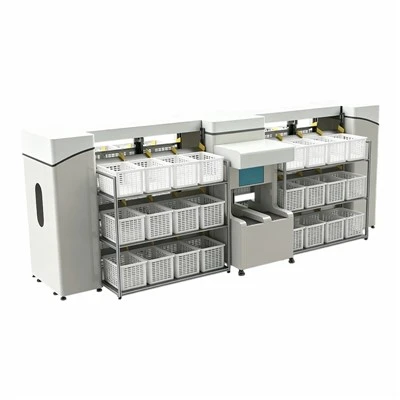
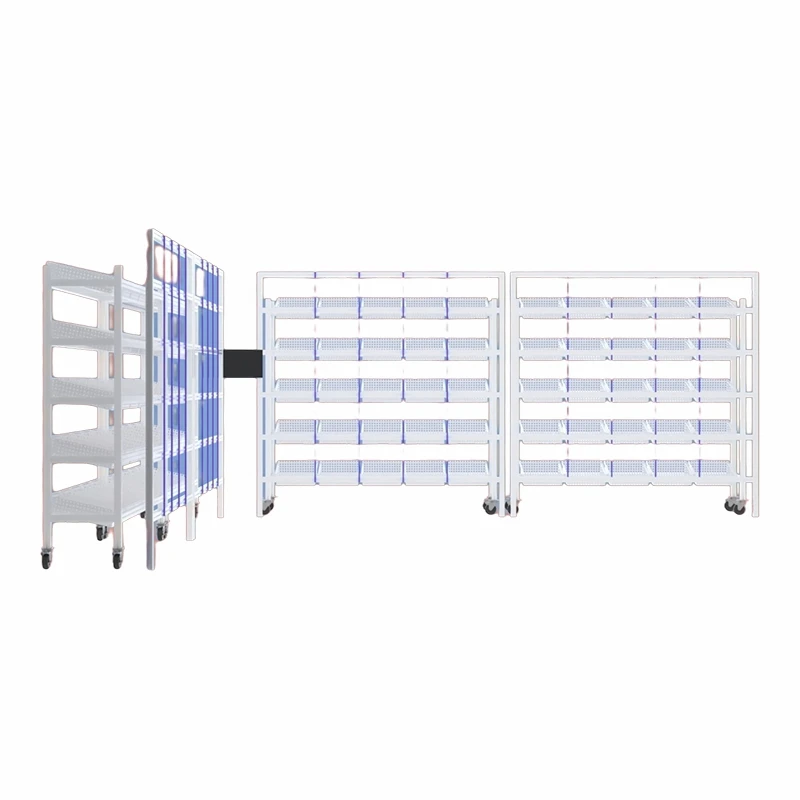
Wait, let’s not forget that light-directed tech doesn’t stop at picking. If you’re expanding your warehouse or streamlining more processes, a lot of companies add on put-to-light or light-directed sorting later. If you ever outgrow just picking, you can easily upgrade your system to include Full-automatic Light-directed Put-to-Light Wall or Light-directed Sorting without replacing your entire existing setup. That’s a big plus, because it means you don’t have to throw away money on hardware if you need to scale later. It’s modular, so you can start with just picking, add sorting or put-to-light when your business grows, and extend your ROI even further.

There are also some less tangible ROI benefits that are easy to overlook, but add up over time. For one, employee satisfaction. Paper pick lists are a pain—workers hate scribbling, misreading numbers, chasing down items that are marked wrong. Light-directed systems make the job way simpler and less stressful. That means lower turnover, which is a huge cost for warehouses. The average warehouse worker turnover is around 40% a year, right? Recruiting, hiring, training a new picker costs about $3,500 per person, according to the American Staffing Association. If light-directed picking cuts your turnover in half, that’s thousands in saved recruiting costs every year. That’s pure profit too, no extra work needed.
Another less obvious benefit? Inventory accuracy. With paper lists, it’s way easier to miscount items or put them in the wrong bin. Light-directed systems are linked to your inventory management software, so every pick updates your stock counts in real time. That means less overstocked items that expire or go out of style, less understocked items that cause backorders, and less time spent doing monthly inventory counts. I’ve had customers who reduced their annual inventory count time by 30 to 40 hours, which is time they can use for actual picking and processing orders. That’s another hidden saving people don’t count at first.
Now, let’s be real—there are pitfalls that can mess up your ROI. The biggest one is overbuying a system that’s too big for your needs. I had a small e-commerce client last year who bought a 1,000-bin light-directed system when they only had 200 SKUs. They paid for way more hardware than they needed, and their payoff timeline stretched out to 18 months instead of 4. Another pitfall is not integrating the system with your existing WMS (warehouse management system). If the lights don’t sync with your inventory software, you still have to do extra checks, so you don’t get the full speed and accuracy gains. We always recommend working with a supplier that customizes the setup to your exact SKU count, order volume, and existing systems, not just pushing a one-size-fits-all kit.
So, to wrap this up: the ROI of light-directed picking isn’t a fixed number. It depends on your order volume, your current error rate, your labor costs, how well you integrate and maintain the system, and whether you plan to scale with extra modules. For most mid to high-volume warehouses, e-commerce fulfillment centers, or even retail stock rooms processing 5,000+ picks a month, the payoff is usually between 6 months and 2 years. For smaller operations, it might be a bit longer, but the long-term savings on labor, turnover, and inventory make it worth considering if you plan to grow.
If you’re curious to run the numbers for your own operation, we can help. We don’t do one-size-fits-all sales pitches—we’ll look at your current picking volume, error rate, labor costs, and future growth plans to give you a clear breakdown of what the ROI would look like for your team. Whether you’re just starting to research light-directed systems or ready to take the next step, we’re here to walk you through every part. Reach out to us to start a conversation about what light-directed picking can do for your business.
References:
- American Staffing Association. (2023). U.S. Warehouse Turnover Rate Report.
- Logistics Management. (2024). "The Hidden Costs of Picking Errors in E-commerce Fulfillment."
- Material Handling Industry Association. (2023). "Return on Investment Analysis for Light-Directed Warehouse Technology."
- Shopify Fulfilment Network. (2024). "2024 E-commerce Fulfillment Efficiency Benchmarks."