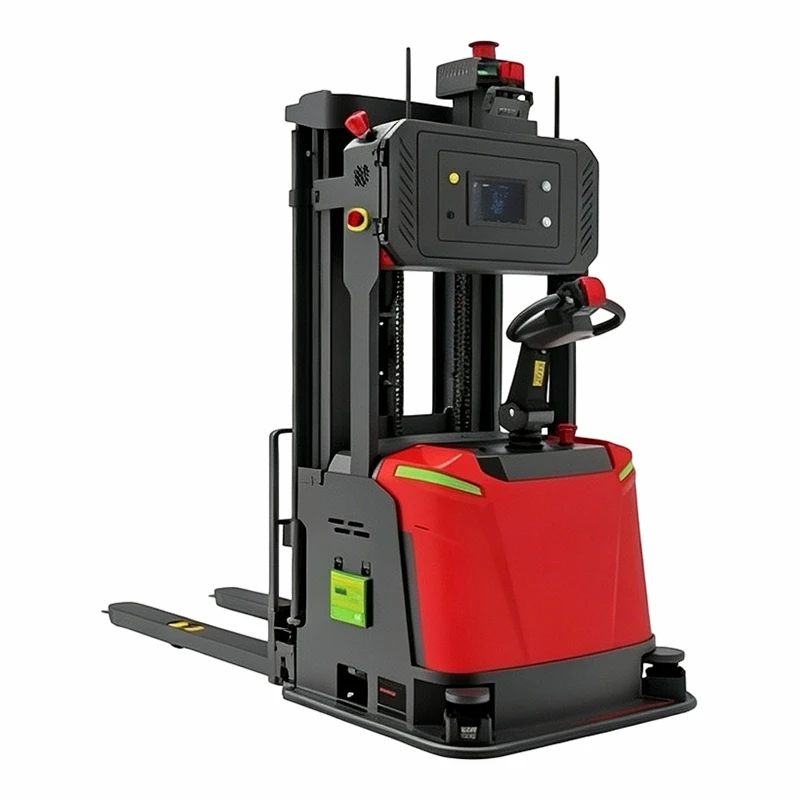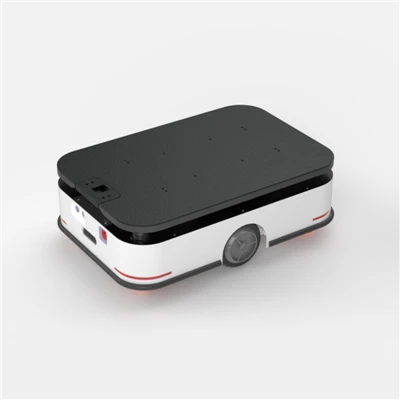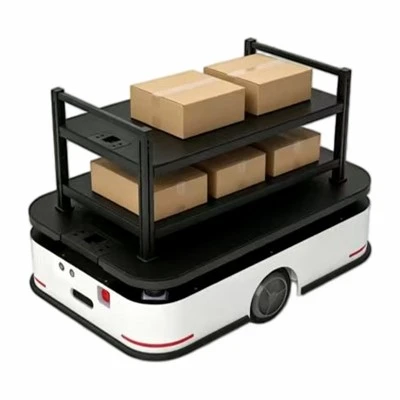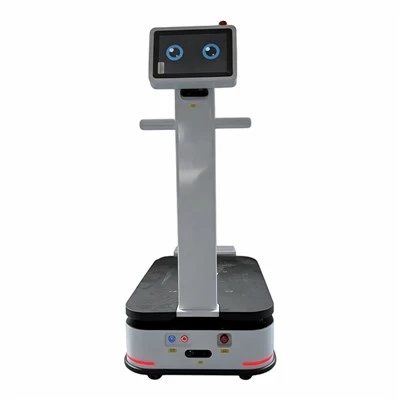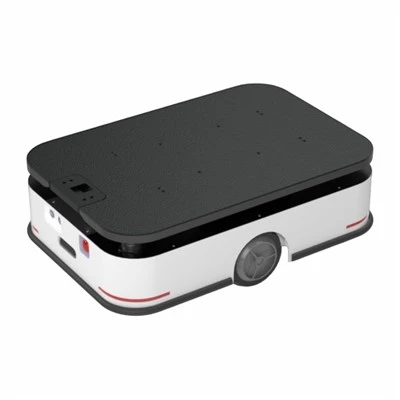

The core architecture of an automated pallet forklift comprises the chassis, drive system, lifting mechanism, sensing system, and control system; these components work in concert to execute automated cargo handling and stacking tasks.
The chassis serves as the foundational structure of the automated pallet forklift and is typically constructed from high-strength steel to support the machine's weight and bear operational loads. Its design balances stability and maneuverability to navigate the narrow aisles and frequent turns characteristic of warehouse environments, while ensuring safety and reliability during loaded operations.
The drive system and lifting mechanism are critical for mobility and material handling. The drive system generally consists of a motor, a reduction gear, and drive wheels, enabling forward and backward movement as well as steering control. The lifting mechanism typically employs electric or hydraulic power to raise and lower the forks, thereby facilitating the storage and retrieval of palletized goods at various rack heights.
The sensing and control systems are central to the forklift's intelligent operation. The sensing system-usually composed of LiDAR, cameras, or ultrasonic sensors-handles environmental mapping and obstacle detection. Meanwhile, the control system processes sensor data and manages path planning, task scheduling, and motion control to achieve autonomous navigation and precise operation. Through the coordinated interaction of these systems, the automated pallet forklift operates stably and efficiently within complex environments.