

If you’re reading this, chances are you’re either exploring how to modernize your warehouse or manufacturing operations, or you’re already weighing the move away from manual forklift operators toward automated solutions. As a supplier of material handling automation, I’ve spent years walking clients through the transition—and the question I hear most often isn’t “will this boost productivity?” It’s “what do I actually need to comply with when using an industrial forklift robot?”
Let’s cut through the hype and the red tape. This isn’t just another list of rules; it’s a framework to keep your team safe, avoid costly shutdowns, and make sure your automated forklift integrates seamlessly with your existing operations. I’ve worked with facilities ranging from 10,000-square-foot distribution centers to 100,000-square-foot manufacturing plants, and I can tell you: skipping these steps doesn’t just lead to fines—it leads to accidents, downtime, and unnecessary stress.
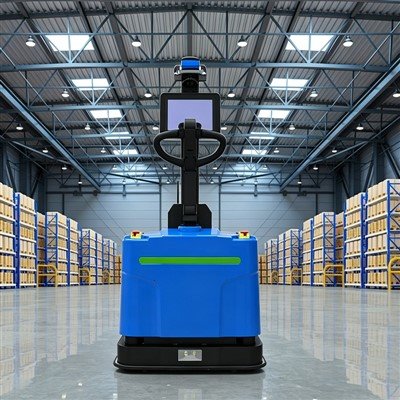
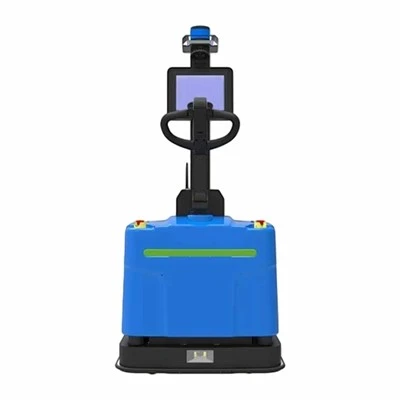
First, it’s important to define what we’re talking about. When I reference an industrial forklift robot, I’m not just talking about a basic driverless machine that moves pallets from point A to B. We’re talking about systems equipped with sensors, navigation technology, and software that can operate in dynamic environments, often alongside manual workers. For clarity, I’ll also note that our line includes specialized models like the unmanned forklift robot, designed for 24/7 operation in low-traffic zones, and the warehouse driverless forklift, optimized for tight aisles and high-density storage. Each has its own nuances when it comes to regulation, but the core requirements apply across all automated material handling equipment.
The foundation of all regulatory compliance for industrial forklift robots starts with global and regional safety standards. Here’s where it gets specific: in the United States, the Occupational Safety and Health Administration (OSHA) is the primary body setting rules for powered industrial trucks, including automated ones. For machinery imported to the EU, you’ll need to adhere to ISO 3691-4, which is the international standard specifically covering driverless industrial trucks. Many other regions, from Asia to Latin America, have adopted versions of these standards, so research your local regulator’s alignment is non-negotiable.
OSHA, for example, doesn’t make a huge distinction between manual and automated forklifts in terms of safety fundamentals—but it does add specific requirements for the automated components. Let’s break down the key OSHA mandates first, because they’re the most widely enforced for North American facilities.
First, a full risk assessment before deployment. OSHA requires that any new powered industrial truck, automated or not, undergo a comprehensive risk assessment by a competent person—someone with specialized training in both material handling equipment and automation safety. This isn’t a checkbox exercise. The assessment has to identify hazards specific to your operation: Are there narrow aisles where workers might walk unexpectedly? Do you handle fragile or heavy loads that could shift during transport? Will the robot be operating alongside manual forklifts or pedestrian workers? These are the questions that need answers, and the risk assessment has to be documented in writing. I can’t tell you how many clients I’ve worked with who skipped this step and ended up with a robot that crashed into a rack because it wasn’t calibrated for their warehouse layout. That’s not just a safety issue—it’s a financial one.
Next, operator and worker training. Wait—if the forklift is automated, do you even need training? Yes, you do. OSHA requires that any personnel who interact with an industrial forklift robot get trained on two key areas: how the automation system works, and how to respond if there’s a fault or emergency. This isn’t just for “operators” of the robot (who might be overseeing it from a control station, rather than sitting in the driver’s seat) but for all warehouse staff. A worker who’s used to dodging manual forklifts might not expect a driverless machine to stop suddenly, or to move in a different pattern than a human-operated one. Our team always works with clients to develop tailored training—for example, teaching pickers how to identify the different beeps and lights our smart automated forklift uses to signal its path, or line supervisors how to intervene if the robot deviates from its route. In one recent client case, a worker who received this training was able to redirect a forklift robot that had detected a misplaced pallet in its path before an accident occurred. That’s the value of proper training, not just paperwork.
Then there’s maintenance and inspection protocols. Automated forklifts don’t require gas or oil changes, but they have sensitive components—LiDAR sensors, navigation cameras, software interfaces—that need regular checks. OSHA mandates a pre-use inspection every day the robot is operated, plus more thorough monthly and annual inspections by a certified technician. For our automated forklift Robert, for example, we provide a digital maintenance checklist that flags sensor calibration, battery health, and navigation accuracy—this isn’t just a tool for our clients’ team, it’s a way to document compliance for OSHA audits. One important note: if you modify the industrial forklift robot after deployment, you have to redo the risk assessment. We’ve had clients who added custom load extensions without updating their safety checks, which led to overloading the robot and causing a load collapse. That’s easily avoidable with clear maintenance rules.
Now, moving beyond OSHA in North America, the FDA has a role if you’re using automated forklifts in food and pharmaceutical facilities. If you’re handling products that come into direct contact with consumers, the materials used to build the industrial forklift robot have to comply with FDA food contact standards. That means no porous parts that can harbor bacteria, easy-to-clean surfaces, and sealed components to prevent cross-contamination. Our line of warehouse driverless forklifts for food processing clients is built with these standards in mind, with stainless steel frames and food-grade lubricants—something we cover in detail during our onboarding process.
For facilities in the EU, as I mentioned earlier, ISO 3691-4 is the standard to follow. This is a more granular standard than OSHA, with specific requirements for navigation, collision avoidance, and emergency stop systems. ISO 3691-4 requires that the industrial forklift robot have at least three layers of collision protection: primary sensors to detect obstacles, secondary systems to slow the robot if an obstacle is too close, and tertiary emergency stops that can activate automatically if needed. Our unmanned forklift robot, designed for EU markets, is certified to ISO 3691-4, so clients don’t have to reinvent the wheel when it comes to compliance. Another key EU requirement is CE marking, which means the entire system has been tested and meets EU safety, health, and environmental protection requirements.


Beyond regional standards, there are two often-overlooked areas of compliance: software updates and data security. Many facilities don’t realize that an industrial forklift robot’s software isn’t a “set it and forget it” tool. Manufacturers have to release security patches to address vulnerabilities, just like any other connected device. If you’re running an automated forklift, you have to install these updates regularly—because a cyber attack on a forklift robot can lead to full facility shutdowns, or even physical damage if the robot is hijacked. In recent years, there have been several high-profile cases of automated logistics systems being targeted by ransomware, so this isn’t a hypothetical. Our team works with clients to schedule non-disruptive software updates, and we provide clear documentation to show OSHA or ISO auditors that security is being maintained. Data security also applies to any data the robot collects—like inventory levels or traffic patterns. If your facility is subject to GDPR (for EU data), you have to ensure that this data is stored and processed in compliance with privacy rules.
Now, let’s talk about common pitfalls I see clients making when first deploying these systems. One big mistake is assuming that “automated” means “untethered from manual processes.” For example, if you’re using a warehouse driverless forklift, you still need a clear set of procedures for when the robot breaks down. OSHA requires that you have a plan for human intervention if the automated system fails, whether that means having a manual forklift on standby or a team member trained to take control of the robot. Another mistake is failing to involve frontline workers in the deployment process. When workers feel like the robot is being forced on them without input, they’re less likely to follow safety protocols—and that’s where accidents happen. We always recommend bringing warehouse supervisors, pickers, and maintenance teams into the planning phase, because they’re the ones who will be working alongside the robot every day.
If you’re evaluating which industrial forklift robot is right for your operation, compliance doesn’t have to be a headache. We make our line of solutions transparent and audit-ready, with pre-built documentation for risk assessments, training, and maintenance. Whether you’re looking for a basic unmanned forklift robot for repetitive pallet moves, or a smart automated forklift that can adapt to dynamic warehouse layouts, we work with you to ensure every step of deployment meets or exceeds regulatory requirements.
Wait a second—let’s circle back to something I touched on earlier: the difference between compliance and operational efficiency. Many operators see regulations as a barrier, but in reality, they’re a safety net that protects your team and your investment. A client of ours in the automotive parts industry recently told me that they tried a cheaper, uncertified automated forklift robot from a competitor, and within six months, they had an accident that totaled a $10,000 rack and injured a worker. They had to pause operations for three days while OSHA conducted an audit, costing more than $50,000 in lost productivity and fines. When they switched to our certified line, including the automated forklift Robert, they not only avoided regulatory issues but reduced downtime by 20% because of the reliable, compliant design.
At the end of the day, deploying an industrial forklift robot is a big decision—one that will impact your operations, your team, and your bottom line for years to come. The last thing you want is to face regulatory penalties, safety incidents, or costly delays because you skipped a compliance step. We’ve helped dozens of facilities across industries navigate the process, from risk assessments to ongoing maintenance, so you can focus on what you do best: growing your business.
If you’re ready to explore how our certified automated material handling solutions can work for your operation, we’re here to guide you through every step. No guesswork, no complicated jargon, just clear, compliant, and effective automation.
References
- Occupational Safety and Health Administration. (2023). Powered Industrial Trucks. 29 CFR Part 1910.178.
- International Organization for Standardization. (2020). Industrial trucks – Safety and verification – Part 4: Driverless industrial trucks and their systems. ISO 3691-4:2020.
- U.S. Food and Drug Administration. (2022). Food Contact Materials: General Provisions. 21 CFR Part 170.
- European Commission. (2021). Guidance on the application of the Machinery Directive 2006/42/EC to Automated Guided Vehicles (AGVs) and Automated Forklifts.