

If you’ve ever walked through a modern, high-volume warehouse and wondered how boxes, pallets, and heavy parts move from point A to point B without a human driver behind the wheel, chances are you’re looking at an AGV—automated guided vehicle. As someone who’s been in the AGV supply game for years, I get asked all the time: what makes these machines actually work? The short answer? It’s not just the wheels or the sensors. It’s the connection between AGVs and the Internet of Things (IoT) that turns a standalone moving robot into a streamlined, efficient part of your entire operation. Let me break that down like I would for a client who’s just checking out our gear—no jargon, just real talk about how these two techs play together.
First, let’s get on the same page about what AGVs actually are, because a lot of people lump them in with generic robots, and that’s not right. AGVs are mobile robots designed to move materials—think pallets, heavy components, even small parts bins—specifically in structured spaces like warehouses, manufacturing floors, or distribution centers. A few years back, most AGVs were pretty dumb: they’d follow a fixed wire taped to the floor or read a bunch of QR codes, and that was it. If something changed in the layout—like a new pallet stack or a blocked aisle—they’d get stuck, and you’d have to reprogram them manually, which took time and cost money. That’s where IoT steps in, and it’s been a total game-changer.
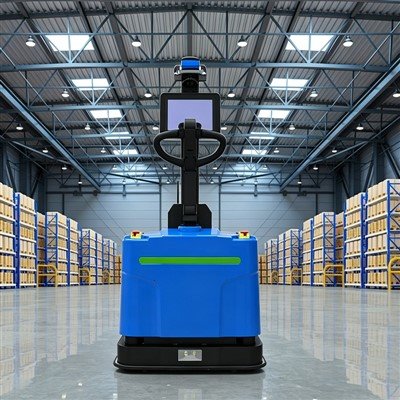
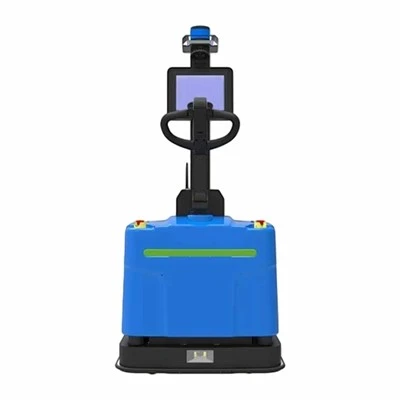
IoT is basically the network of physical objects (like our AGVs) that have sensors, software, and connectivity built in, so they can send and receive data without a human touching them every two seconds. Before IoT, an AGV would run its own little show—collect data about its own battery life or how many loads it moved, but only store that data until you manually downloaded it. With IoT, that data flows in real time to a central system, and suddenly, every AGV in your fleet is part of a bigger, coordinated plan. Let’s use a real example here: if you’re running a busy warehouse, and one of our Automated Guided Vehicle 400KG units is tasked with moving a pallet of goods from the loading dock to the storage aisle, IoT lets that AGV “talk” to other machines in the space. Maybe a conveyor belt by the dock is running behind, so the AGV gets a signal to wait 2 minutes instead of idling at the dock, saving battery and keeping the line moving. Or if the warehouse management system (WMS) updates a storage location because a new shelf got installed, every AGV automatically gets that update—no need for a tech to re-program each one individually. That’s the kind of agility legacy AGVs could never pull off, right?
Let’s talk about some specific, tangible ways this connection works for businesses, because at the end of the day, you care about uptime, cost savings, and less headaches. First, predictive maintenance. If your AGVs break down out of nowhere, that’s downtime—like, thousands of dollars lost per hour, depending on your operation. IoT sensors on our AGVs track every little thing: motor temperature, battery health, wheel rotation speed, even how often the brakes engage. For example, our Lifting Robot 400KG line has built-in sensors that monitor the hydraulic system used to lift heavy loads. If the sensor picks up a tiny, gradual increase in pressure that could signal a seal starting to leak, it sends an alert to your maintenance team before the seal actually fails and the robot stops working. No more scrambling to fix a broken AGV at 2 a.m. when your night shift is already shorthanded. That’s proactive, not reactive, and it’s all because of IoT.


Then there’s fleet optimization, which is a big one for people with multiple AGVs. Let’s say you have 10 AGVs moving around a 100,000 sq ft warehouse. Without IoT, each AGV is on its own route, and you might end up with two AGVs waiting at the same intersection, or one taking the long way around a crowded aisle when another could step in and do the job faster. With IoT, all those AGVs send their location data every second to a central dashboard. The system can adjust routes in real time: if an Automated Handling Robot 1000KG needs to move a really heavy pallet of raw materials to the production floor, it can get a clear, collision-free route, and the other AGVs in the area get rerouted to give it space. That cuts down on idle time, reduces wear and tear on the AGVs, and makes your whole operation way more efficient. I’ve seen this first-hand with a client who switched from legacy AGVs to our IoT-connected models—they cut their material moving time by 22% in the first quarter alone, and that’s a number that translates directly to their bottom line.
Safety is another area where AGVs and IoT together make a huge difference. Warehouses and factories are busy places, with forklifts, human workers, and lots of heavy stuff moving around. Old AGVs would stop if they ran into a physical barrier, but that’s not great if a worker is walking in the aisle or a forklift is passing by. Our IoT-enabled AGVs have proximity sensors, but more importantly, they connect to the facility’s entire safety network. For example, if a human worker is wearing a IoT-enabled badge (something pretty common in modern warehouses), the AGV can detect that badge’s exact location and slow down or stop well before getting close, instead of just detecting a random box in the way. Even the Warehouse AGV 400KG, which is built for tight storage aisles, uses this tech to avoid accidents that could hurt people or damage inventory. We had a client last year who was dealing with a lot of near-misses between human workers and old AGVs, and after switching to our IoT-connected models, they went 6 months without a single safety incident related to material moving equipment. That’s not just good for compliance—it’s good for your team, and that matters more than any metric.
Wait, let’s not sleep on data, because that’s the core of IoT. Before, if you wanted to know how many loads your AGVs moved in a week, how much battery they used, or which routes were the most inefficient, you had to go collect that data manually from each unit. It was a huge hassle, and a lot of times, you’d miss gaps or get incomplete info. With IoT, that data is collected automatically, stored in the cloud, and can be accessed anytime from your phone or computer. So if you’re a operations manager on vacation and you get an alert that your Automated Guided Vehicle 600KG fleet is running low on battery, you can have your on-site team swap out batteries before the next shift starts, no need to call in an emergency meeting or fly back early. You can also use that data to make smarter decisions: if you notice that most of your AGV traffic is focused on three aisles, you can rearrange your storage layout to cut down on travel time, or even adjust your AGV fleet size so you’re not paying for more units than you actually need. I had a small manufacturing client do that last year—they realized they only needed 8 AGVs instead of 12, thanks to the data from our IoT setup, which saved them over $15,000 a year in operating costs.
Now, let’s be real—this isn’t plug-and-play, and I don’t want to oversell it. You can’t just buy an AGV and think it’s IoT-connected automatically. The connection between AGVs and IoT requires a few key things: first, the AGVs have to have the right sensors and connectivity modules built in, which is exactly what we design here at our AGV supplier. Second, you need a compatible central system (usually a WMS or a fleet management software) that can pull the IoT data together. Third, you need to make sure your facility’s Wi-Fi is strong enough—if you’re in a big warehouse with concrete walls that block signals, you might need to add a few extra access points to keep the IoT data flowing smoothly. But that’s not a big lift, and most clients find that the benefits way outweigh the small setup cost.
I also want to address a common concern I hear: “Is this secure? If my AGVs are connected to the internet, could someone hack them?” That’s a valid question, and we take security super seriously. All of our IoT-enabled AGVs use end-to-end encryption for their data, so the only people who can access the fleet data are your authorized team. We also have regular security updates, just like your phone or laptop, to patch any vulnerabilities. We haven’t had a single security issue with our AGVs since we rolled out the IoT line 3 years ago, because we built security into the design from day one, not as an afterthought.
So, putting this all together: AGVs are the workhorses of modern material handling, but they only reach their full potential when connected to IoT. IoT turns a group of independent robots into a coordinated, intelligent fleet that’s efficient, safe, easy to maintain, and gives you the data you need to run your operation better. Whether you’re looking for a compact unit for tight warehouse spaces, like our Warehouse AGV 400KG, or a heavy-duty model for moving massive industrial parts, like our Lifting Robot 400KG or Automated Handling Robot 1000KG, the IoT connection is what makes those units worth the investment, not just another piece of equipment in your facility.
If you’re tired of dealing with AGVs that get stuck, cause unnecessary downtime, or don’t give you the insights you need, let’s chat. We can walk through your specific operation, show you how our IoT-connected AGVs can fit your workflow, and even give you a demo so you can see the connection between AGVs and IoT in action. No sales pitch, just straight talk about what will work for your team.
References
- International Organization for Standardization. (2021). ISO 3691-4:2021 - Safety of industrial trucks - Part 4: Automated industrial trucks and automated guided vehicle systems.
- Gartner Inc. (2023). Hype Cycle for Industrial Internet of Things, 2023.
- Material Handling Industry (MHI). (2022). AGV and AMR Market Report: Global Trends and Growth Projections.
- Bosch Rexroth AG. (2021). "The Role of IoT in Modern Automated Guided Vehicle Fleets." Industrial Technology Journal.