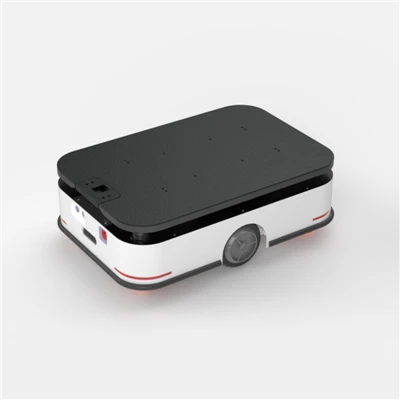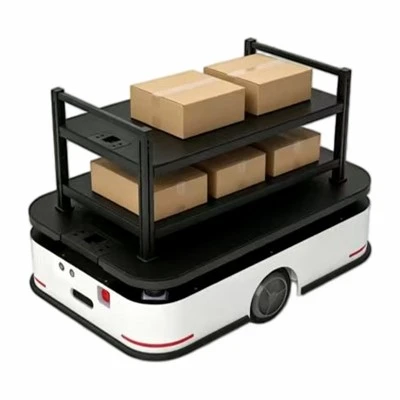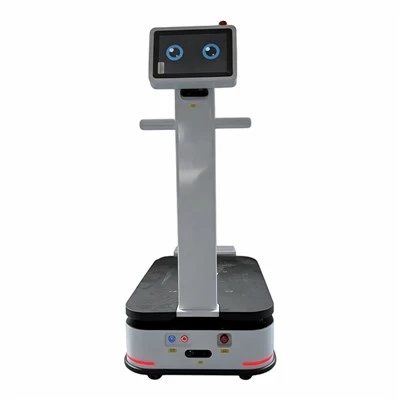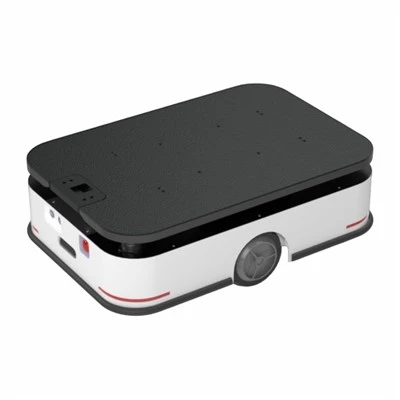

The implementation of autonomous mobile robots relies on the synergy of several key technologies, with environmental perception serving as the foundation. Robots gather information about their surroundings using devices such as LiDAR, cameras, ultrasonic sensors, and inertial measurement units, employing data fusion techniques to enhance perception accuracy. Precise environmental perception enables robots to identify obstacles, target locations, and path features, providing reliable data for subsequent navigation and decision-making.
Localization and mapping technologies are central to autonomous mobile robots. Robots must determine their own position and construct a map of the environment, often in unknown or partially known settings. A common approach is Simultaneous Localization and Mapping (SLAM), which enables real-time environmental modeling and position estimation as the robot moves; this lays the groundwork for autonomous navigation and improves the robot's adaptability in complex environments.
Path planning and navigation technologies determine a robot's operational efficiency and the quality of task execution. Based on environmental maps, target locations, and obstacle data, the system calculates an optimal movement path and dynamically adjusts it in response to environmental changes. When encountering new obstacles or changes in the path, the robot can rapidly re-plan its route, ensuring safe, efficient autonomous navigation and obstacle avoidance.
Motion control and intelligent decision-making technologies are also indispensable components of autonomous mobile robots. The motion control system coordinates the operation of drive motors and actuators, ensuring the robot moves stably along the planned path; meanwhile, the intelligent decision-making system analyzes and processes environmental data using AI algorithms to handle task allocation, behavior selection, and autonomous optimization. With advancements in artificial intelligence, big data, and communication technologies, the intelligence level of autonomous mobile robots is continuously rising, further enhancing their operational capabilities.