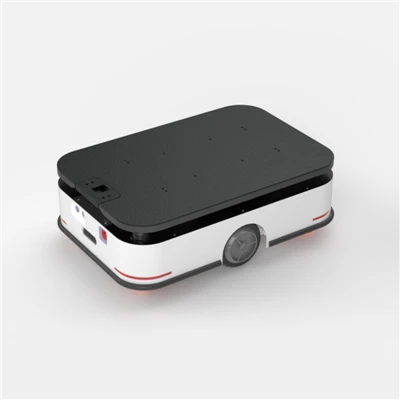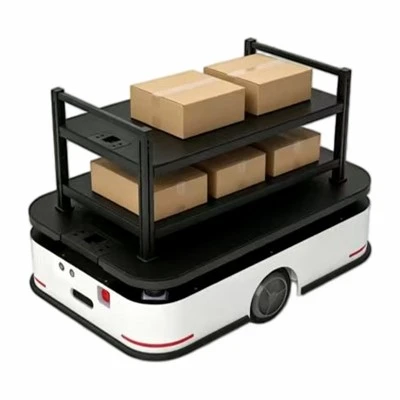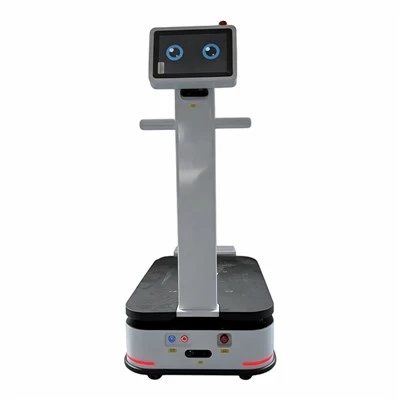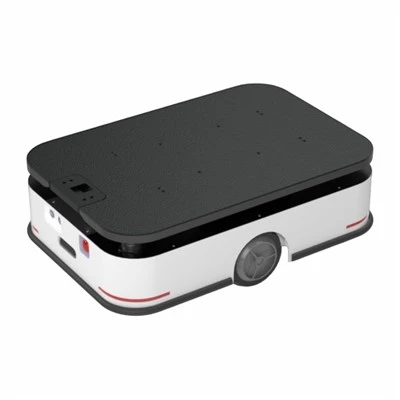

Autonomous mobile robots primarily consist of three major components: the perception system, the decision-making system, and the execution system. The perception system acts as the robot's "eyes" and "ears," responsible for gathering information about the surrounding environment. Commonly used sensors include LiDAR, cameras, ultrasonic sensors, and inertial measurement units (IMUs). These devices capture environmental data in real-time and transmit it to the robot's control system, providing the foundational information required for subsequent localization, navigation, and obstacle avoidance.
The decision-making system is the core component of the autonomous mobile robot, functioning as its "brain." By processing and analyzing data collected by sensors, this system performs tasks such as environmental modeling, path planning, and motion decision-making. In practical applications, the decision-making system typically integrates localization and mapping technologies, path planning algorithms, and artificial intelligence methods. This enables the robot to autonomously select the optimal course of action based on task requirements and environmental changes, thereby enhancing operational efficiency and adaptability.
The execution system is responsible for translating decisions into actual physical movement; it primarily comprises controllers, drive motors, transmission mechanisms, and power systems. Once the decision-making system generates motion commands, the execution system precisely controls the robot's speed, direction, and orientation to perform actions such as moving forward, turning, and stopping. Throughout this process, the various components maintain real-time information exchange to ensure the robot can stably and safely complete its autonomous navigation and operational tasks.