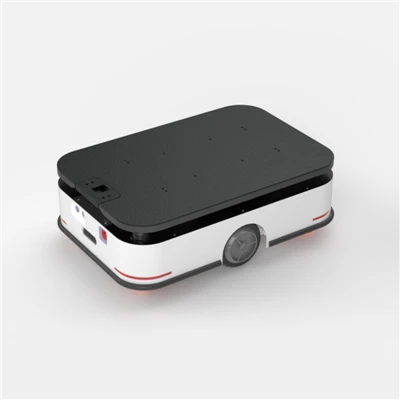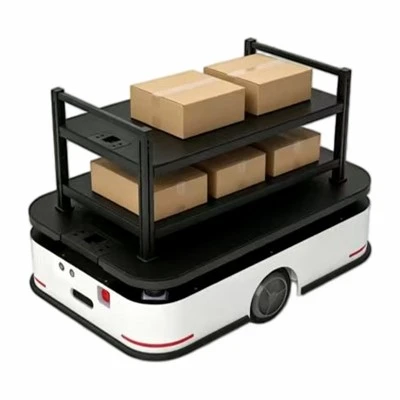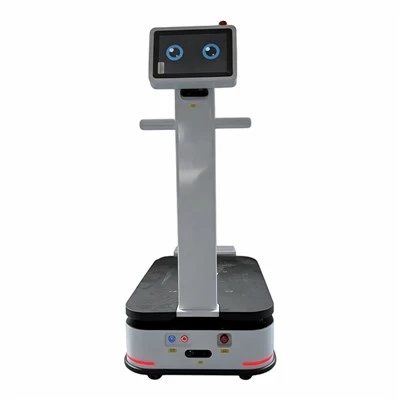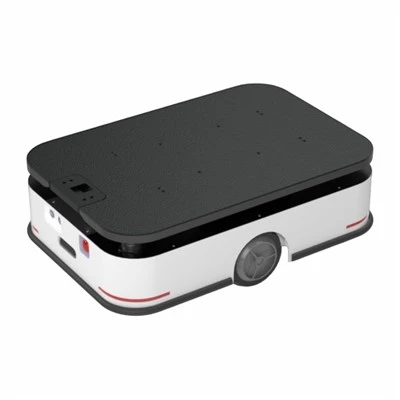

The operation of autonomous mobile robots relies primarily on the coordination of environmental perception, information processing, decision-making and planning, and motion control. Equipped with devices such as LiDAR, cameras, ultrasonic sensors, and inertial measurement units, the robot collects real-time data on its surroundings and its own operational status, transmitting this information to the control system for analysis.
Upon acquiring environmental data, the robot employs localization and mapping technologies to identify and model its surroundings, thereby determining its own position. By fusing sensor data, the system generates an accurate environmental map and updates it in real-time to reflect changes, establishing the foundation for autonomous navigation.
Once perception and localization are complete, the decision-making system plans a path based on mission objectives. The system calculates the optimal route by considering factors such as the target location, the distribution of obstacles, and operational efficiency. Should the robot encounter new obstacles or environmental changes during operation, the system can promptly re-plan the route to ensure the mission is successfully completed.
The motion control system issues commands to the drive motors based on the planned path, enabling actions such as moving forward, reversing, turning, and stopping. Throughout the movement process, the robot continuously receives sensor feedback to adjust its actual operational state in real-time. This creates a closed-loop control system-integrating perception, decision-making, and execution-to achieve autonomous, safe, and efficient mobile operations.