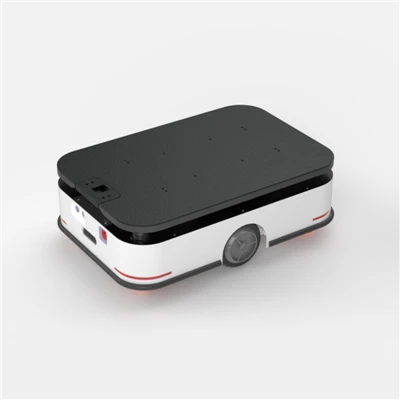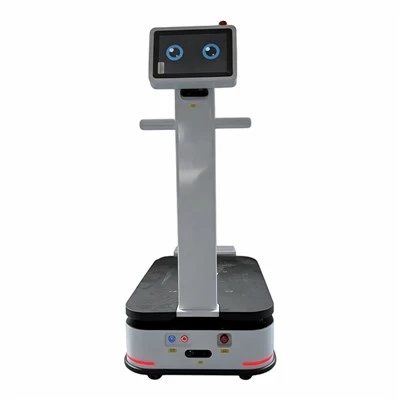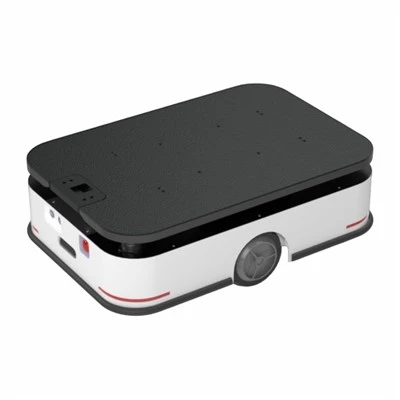

The design principles of Automated Guided Vehicles (AGVs) aim to achieve autonomous material handling and intelligent navigation. By integrating perception, decision-making, and execution at the system level, the vehicle can safely and stably perform transport tasks in complex environments. The core design philosophy relies on multi-source information fusion and closed-loop control mechanisms to enable real-time responses to the vehicle's motion state and environmental changes.
Structurally, AGVs typically employ a modular design approach, functionally partitioning and optimizing the integration of the chassis, drive system, control system, navigation system, and power supply system. The chassis structure must meet load-bearing and spatial adaptability requirements while ensuring operational stability. Meanwhile, the drive system-whether differential drive, steerable wheel drive, or omnidirectional wheel drive-is selected based on specific application scenarios to satisfy varying maneuverability needs.
Regarding control and navigation, AGVs acquire environmental data via sensors and utilize localization and mapping technologies to determine their real-time position. Based on this, the system calculates the optimal route using path-planning algorithms and translates the plan into motor control commands via the controller; this ensures precise control over speed and direction, allowing the vehicle to follow the intended trajectory.
AGV design principles also prioritize safety and reliability. Systems are typically equipped with multiple safety mechanisms-such as collision detection, emergency stop devices, and anomaly alarm systems-to handle unexpected situations in complex operating environments. Furthermore, through the synergistic optimization of software and hardware, AGVs achieve high scalability and adaptability, enabling them to meet the demands of diverse applications such as industrial manufacturing and warehousing logistics.