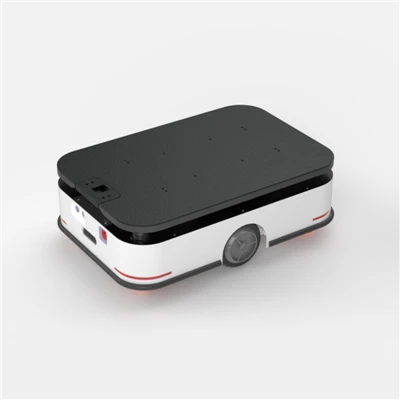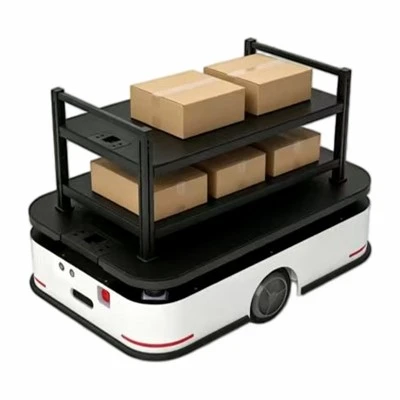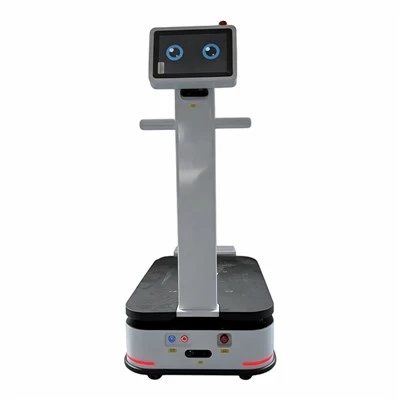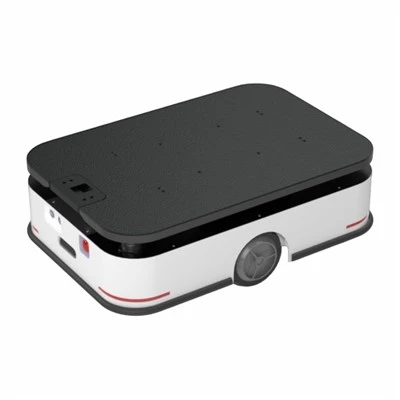

Autonomous mobile robots (AMRs) possess a range of capabilities-including environmental perception, autonomous navigation, path planning, obstacle avoidance, and task execution-making them vital platforms for intelligent operations. By utilizing devices such as LiDAR, cameras, and ultrasonic sensors, these robots capture real-time data about their surroundings, identifying obstacles, path features, and target locations to inform subsequent decision-making.
Autonomous navigation and path planning are among the core functions of AMRs. Based on preset targets and environmental maps, the robot autonomously calculates the optimal route and adjusts its path in real-time during movement. Upon detecting obstacles or environmental changes, the system can rapidly re-plan the route to ensure safe and efficient mobility. Additionally, AMRs feature autonomous localization capabilities, accurately determining their position and motion status to maintain navigation precision and operational stability.
AMRs can also perform tasks such as material handling, inspection and monitoring, delivery services, and environmental cleaning, tailored to specific application requirements. During operation, they exchange information with other equipment or management systems, enabling task scheduling, data transmission, and collaborative workflows. Driven by advancements in artificial intelligence, modern AMRs possess learning and optimization capabilities, allowing them to continuously improve operational efficiency and environmental adaptability to meet the demands of diverse application scenarios.