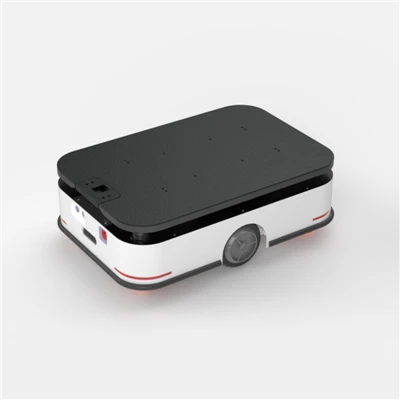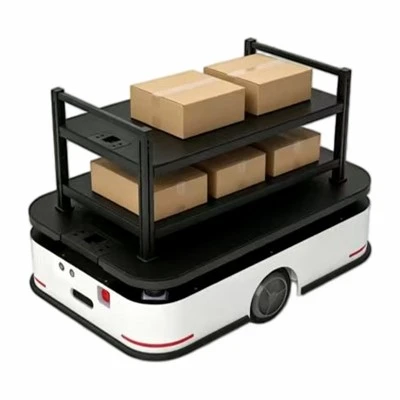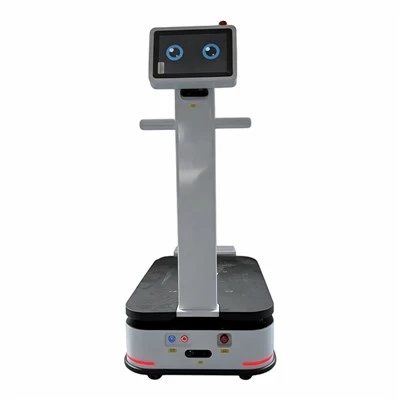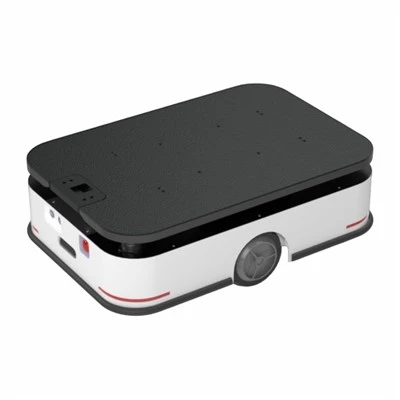

The key technologies of Automated Guided Vehicles (AGVs) encompass several areas-including environmental perception, localization and navigation, path planning, motion control, and multi-vehicle scheduling-which collectively underpin their autonomous operational capabilities and practical engineering performance.
Environmental perception technology serves as the foundation for AGV autonomy; it utilizes devices such as LiDAR, cameras, and ultrasonic sensors to gather information about the surroundings and to identify and assess obstacles, aisle boundaries, and dynamic targets. Multi-sensor fusion methods enhance the accuracy and robustness of this perception, enabling stable AGV operation within complex industrial environments.
Localization and navigation are core AGV technologies, with common methods including magnetic, QR code, LiDAR, and visual navigation. Notably, LiDAR-based Simultaneous Localization and Mapping (SLAM) is widely applied; it enables real-time localization and map updates in unknown or semi-structured environments, providing a reliable basis for path planning.
Path planning and motion control technologies determine the operational efficiency and safety of AGVs. Path planning algorithms calculate the optimal route from a starting point to a destination and dynamically adjust the path in response to environmental changes during operation. Motion control translates these planned routes into specific speed and directional commands, ensuring the vehicle executes movement tasks smoothly and accurately.
Multi-vehicle collaborative scheduling is also crucial in modern AGV systems. In large-scale warehousing or production systems, multiple AGVs must coordinate to complete transport tasks; scheduling systems manage task allocation, path coordination, and conflict avoidance to boost overall operational efficiency. Driven by advancements in artificial intelligence and communication technologies, AGV systems are progressively evolving toward greater intelligence and swarm-based operations.