

In the dynamic world of high - speed production lines, the choice of conveyor systems can make or break the efficiency and productivity of an entire operation. As a supplier of Powered Roller Conveyors, I've witnessed firsthand how these systems perform in high - speed environments, and I'm excited to share some insights with you.


Understanding the Basics of a Powered Roller Conveyor
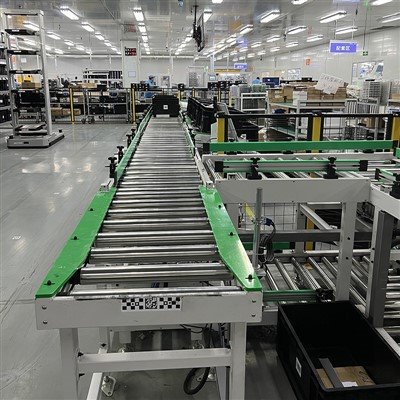
First off, let's talk a bit about what a Powered Roller Conveyor is. Unlike a Gravity Roller Conveyor, which relies on gravity to move items along, a Powered Roller Conveyor uses an external power source, such as an electric motor, to drive the rollers. This gives it much more control over the speed and movement of the conveyed materials.
The rollers on a powered conveyor are typically made of materials like steel, aluminum, or plastic, depending on the specific application. Steel rollers are strong and durable, making them suitable for heavy - duty applications. Aluminum rollers are lightweight and corrosion - resistant, which is great for food and beverage industries. Plastic rollers, on the other hand, are quiet and can be used in applications where product damage needs to be minimized.
Performance in a High - Speed Production Line
1. Speed and Throughput
One of the most significant advantages of using a Powered Roller Conveyor in a high - speed production line is its ability to handle high throughput. These conveyors can be designed to operate at very high speeds, allowing for a large number of items to be transported quickly from one point to another. For example, in a bottling plant, a high - speed Powered Roller Conveyor can move hundreds of bottles per minute, ensuring that the production line runs smoothly and efficiently.
The speed of a Powered Roller Conveyor can be easily adjusted to match the requirements of the production line. This flexibility is crucial in high - speed environments where the production rate may vary depending on factors such as demand, product type, or shift changes. With a simple adjustment of the motor speed, the conveyor can be optimized for maximum efficiency.
2. Precision and Control
In a high - speed production line, precision and control are essential. A Powered Roller Conveyor offers excellent control over the movement of materials, ensuring that items are transported accurately and consistently. This is particularly important in industries where products need to be aligned precisely, such as in electronics manufacturing or automotive assembly.
The powered rollers can be arranged in different configurations to achieve specific movement patterns. For instance, zones of powered rollers can be used to accumulate products without causing damage. This allows for better synchronization between different stages of the production line, reducing the risk of bottlenecks and improving overall efficiency.
3. Durability and Reliability
High - speed production lines operate around the clock, and the conveyor system needs to keep up. Powered Roller Conveyors are designed to be durable and reliable, with minimal maintenance requirements. The robust construction of the rollers and the drive system ensures that the conveyor can withstand the rigors of continuous operation.
Regular maintenance, such as lubricating the rollers and checking the drive belts, can further extend the lifespan of the conveyor. Additionally, many modern Powered Roller Conveyors are equipped with advanced monitoring systems that can detect potential issues before they become major problems, reducing downtime and increasing productivity.
4. Compatibility with Other Equipment
A Powered Roller Conveyor can be easily integrated with other equipment in a high - speed production line, such as robotic arms, sorting machines, and packaging equipment. This seamless integration allows for a more automated and efficient production process.
For example, in a distribution center, a Powered Roller Conveyor can be connected to a sorting machine to quickly and accurately sort packages based on their destination. The conveyor can also be interfaced with a robotic arm to load and unload products, further streamlining the operation.
Comparing with Other Conveyor Systems
While Powered Roller Conveyors offer many advantages in high - speed production lines, it's important to consider how they compare to other types of conveyors.
1. Compared to Warehouse Belt Conveyors
Warehouse Belt Conveyors are another popular choice for material handling. Belt conveyors are known for their smooth and continuous movement, which is ideal for transporting items that require a gentle touch. However, in high - speed applications, belt conveyors may have some limitations.
Belt conveyors can be more prone to wear and tear, especially at high speeds. The belts can stretch, slip, or become damaged over time, requiring more frequent maintenance. Additionally, belt conveyors may not be as suitable for handling irregularly shaped items as Powered Roller Conveyors, as the items may get stuck or fall off the belt.
2. Compared to Warehouse Roller Conveyors
Warehouse Roller Conveyors can be either gravity - powered or powered. Gravity roller conveyors are simple and cost - effective, but they rely on the slope and gravity to move items, which can limit their application in high - speed production lines.
Powered Warehouse Roller Conveyors are similar to the high - speed Powered Roller Conveyors we've been discussing. However, high - speed production line conveyors are often designed with more advanced features and higher performance specifications to meet the demands of continuous, high - volume operation.
Real - World Applications
Let's take a look at some real - world applications of Powered Roller Conveyors in high - speed production lines.
In the food and beverage industry, Powered Roller Conveyors are used to transport products such as cans, bottles, and cartons at high speeds. These conveyors can be easily cleaned and sanitized, meeting the strict hygiene standards of the industry.
In the automotive industry, Powered Roller Conveyors play a crucial role in the assembly line. They are used to move car parts from one workstation to another, ensuring that the assembly process is fast and efficient.
In the e - commerce and logistics industry, Powered Roller Conveyors are used in distribution centers to sort and transport packages. The high - speed operation of these conveyors allows for quick order fulfillment, reducing customer wait times.
Conclusion
In conclusion, a Powered Roller Conveyor is an excellent choice for high - speed production lines. Its ability to handle high throughput, offer precision and control, provide durability and reliability, and integrate with other equipment makes it a valuable asset in any manufacturing or distribution operation.
If you're looking to improve the efficiency of your high - speed production line, or if you're in the market for a new conveyor system, I encourage you to consider a Powered Roller Conveyor. Contact us today to discuss your specific requirements and how our products can meet your needs. We're always happy to have a chat and find the best solution for your business.
References
- Conveyor Equipment Manufacturers Association (CEMA). Conveyor Equipment Handbook.
- Material Handling Industry (MHI). State of the Industry Report on Conveyor Systems.