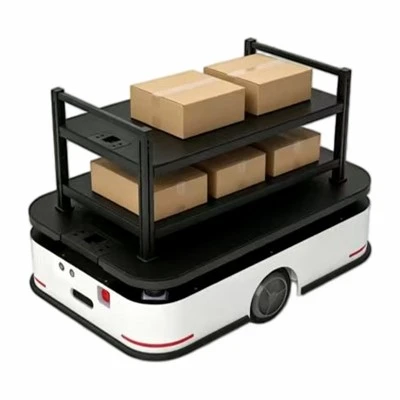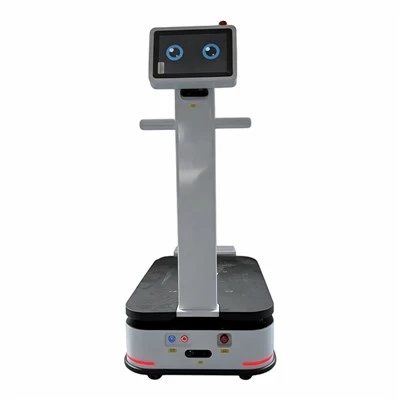

Automated Guided Vehicles (AGVs) are intelligent material-handling devices capable of operating autonomously along preset routes or navigation instructions, primarily used for material transport and logistics distribution. Compared to traditional manual handling methods, AGVs offer high levels of automation, stable operation, and safety and reliability; they effectively boost production efficiency while reducing labor and management costs for enterprises.
AGVs are widely used for material transport within production workshops. They can automatically execute handling tasks for raw materials, semi-finished goods, and finished products in accordance with production schedules, enabling seamless integration between production equipment. By interfacing with production management systems, AGVs enhance the automation of production lines and minimize manual intervention, thereby improving overall productivity.
AGVs primarily handle tasks such as cargo transport, sorting, warehousing, and retrieval. Based on task instructions from warehouse management systems, these robots automatically plan their routes and transport goods. Particularly in large-scale logistics centers and e-commerce warehouses, AGVs facilitate high-frequency, high-efficiency logistics operations, effectively reducing cargo turnaround times.
AGVs also find extensive application in sectors such as healthcare, airports, ports, and the service industry. In hospitals, they handle the distribution of medicines, medical equipment, and supplies; at airports and ports, they transport luggage, containers, and cargo. In specialized environments, AGVs can replace human workers in hazardous areas, thereby enhancing safety and operational efficiency. With the advancement of intelligent manufacturing and smart logistics, the scope of AGV applications continues to expand.