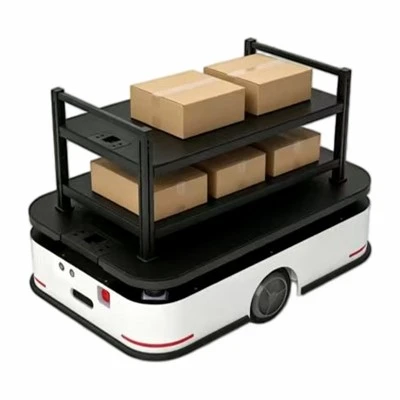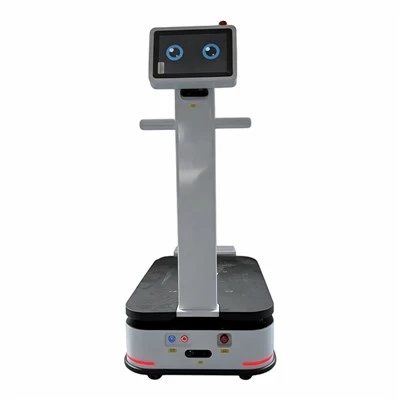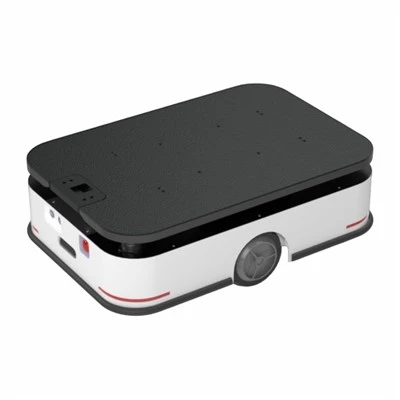

An Automated Guided Vehicle (AGV) is a type of intelligent material-handling equipment capable of traveling autonomously along preset paths or following navigation instructions without human operation. Typically navigating via magnetic strips, QR codes, lasers, or vision systems, AGVs integrate control systems to achieve autonomous positioning and path tracking, thereby executing material transport and handling tasks.
AGVs were first deployed in industrial production and warehouse logistics, primarily to replace manual handling methods and automate the movement of materials between workstations or storage areas. With advancements in automation technology, AGV capabilities have evolved; beyond executing fixed-route transport, they now feature path optimization, dynamic obstacle avoidance, and coordinated multi-vehicle scheduling.
Structurally, an AGV generally comprises a vehicle chassis, a drive system, a control system, a navigation system, and a power supply system. The control system acts as the "core brain," managing task scheduling and motion control; the navigation system handles positioning and path recognition; and the drive system converts control commands into physical movement, enabling actions such as forward motion, steering, and stopping.
AGVs are widely used across various sectors, including industrial manufacturing, smart warehousing, port logistics, medical distribution, and the service industry. Driven by advancements in artificial intelligence, the Internet of Things (IoT), and 5G communication, AGVs are evolving toward greater intelligence, flexibility, and collaborative capability, playing an increasingly vital role in modern smart logistics and intelligent manufacturing systems.