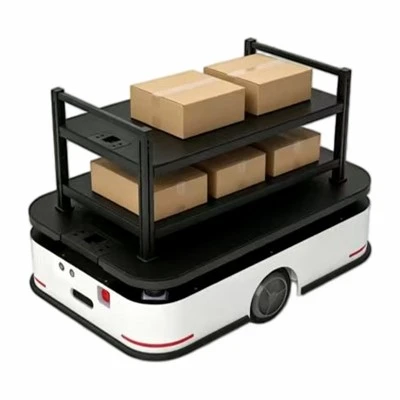

The choice of materials for automated pallet trucks directly impacts their load-bearing capacity, durability, and operational safety; components are typically designed with specific material selections based on their functions. The chassis, serving as the structural foundation, is generally manufactured from high-strength low-alloy steel or premium carbon structural steel. These materials offer high strength and rigidity, ensuring structural stability under full-load or even impact-load conditions, while also providing excellent fatigue resistance.
Critical load-bearing and moving components-such as forks, masts, and connecting brackets-typically utilize heat-treated or alloy-strengthened steels to enhance wear resistance and resistance to deformation. As the components that directly bear the load, forks demand high strength and toughness; they are usually formed through integral forging or by welding high-strength steel plates to ensure safety and reliability during long-term use.
Drive and transmission components, such as gears and shafts, predominantly utilize alloy steels or cast steels. When subjected to precision machining and surface hardening treatments, these materials effectively minimize wear and improve transmission efficiency. Additionally, aluminum alloys are employed for certain structural parts to reduce the overall weight of the vehicle, thereby enhancing maneuverability and energy efficiency.
Protective housings and non-load-bearing components often utilize engineering plastics or composite materials to meet requirements for lightweight design and protection. These materials offer excellent corrosion resistance and electrical insulation properties, helping to safeguard internal electronic components. Through the strategic combination of these various materials, automated pallet trucks achieve an optimal balance of strength, safety, overall performance, and service life.