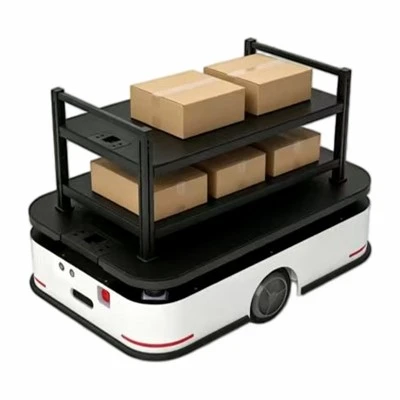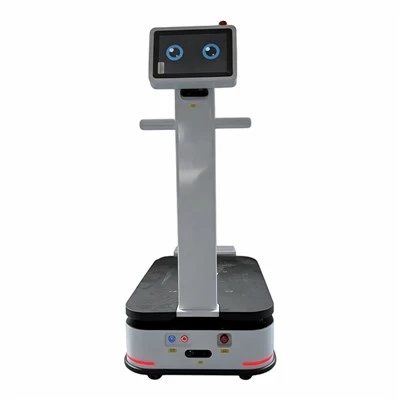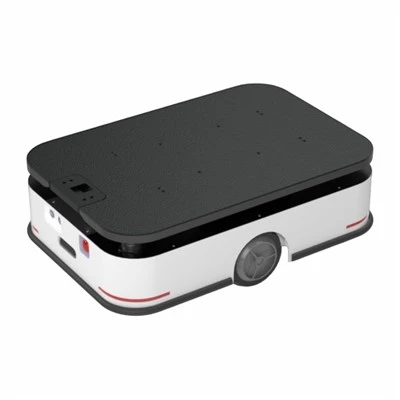

The operation of an automated pallet forklift relies on the coordinated functioning of environmental perception, path planning, motion control, and actuation mechanisms, achieving autonomous transport and stacking through a closed-loop information system. The system first gathers data on the surrounding environment using LiDAR, vision sensors, or ultrasonic sensors, identifying and modeling racks, pallets, and obstacles to provide the foundational data required for subsequent decision-making.
The control system updates its position in real-time using Simultaneous Localization and Mapping (SLAM) technology or pre-loaded maps, calculating the optimal travel path based on mission objectives. It dynamically adjusts the route in response to changes in the warehouse environment, ensuring the forklift safely and efficiently reaches designated storage locations or work points.
The control system translates path planning results into specific control commands, driving the motor system to execute movements such as moving forward, reversing, and turning. Simultaneously, the lifting mechanism raises or lowers the forks as required by the task to pick up, place, and stack palletized goods. Throughout this process, closed-loop control continuously corrects for motion deviations to ensure positioning accuracy and operational stability.
Automated pallet forklifts also incorporate safety control mechanisms during operation. Upon detecting obstacles or anomalies, the system automatically decelerates or performs an emergency stop to prevent collisions. Through the synergy of perception, decision-making, and execution, the automated pallet forklift is capable of performing autonomous, safe, and efficient operations within complex warehouse environments.