

Hey there! As a supplier of Warehouse Roller Conveyors, I often get asked this question: Can warehouse roller conveyors be used for inclined or declined transportation? Well, let's dig into this topic and find out.
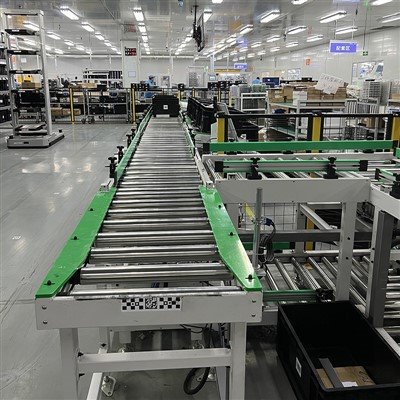
First off, let's understand what warehouse roller conveyors are. There are mainly two types: Powered Roller Conveyor and Gravity Roller Conveyor. Powered Roller Conveyor is driven by a power source like an electric motor, which allows it to move products at a controlled speed. It's great for handling a wide range of loads and can be easily adjusted according to the needs of the warehouse. On the other hand, Gravity Roller Conveyor relies on gravity to move items. It's simple, cost - effective, and works well for moving products on a flat or slightly declined surface.
Now, back to the main question. The short answer is yes, warehouse roller conveyors can be used for inclined or declined transportation, but it depends on several factors.
Using Warehouse Roller Conveyors for Inclined Transportation
When it comes to inclined transportation, powered roller conveyors are the go - to option in most cases. Gravity roller conveyors usually struggle to move products uphill because gravity is working against them. Powered roller conveyors, however, can overcome this challenge.
One of the key factors to consider is the angle of the incline. A gentle incline, say up to 10 degrees, is relatively easy for a powered roller conveyor to handle. The speed of the conveyor and the friction between the rollers and the products also play important roles. If the products are light and smooth, the conveyor may need to run at a higher speed to move them up the incline. For heavier and rougher products, a lower speed might be sufficient.
Another thing to think about is the type of product being transported. Irregularly shaped items or those with low friction surfaces can be a problem. For example, if you're trying to move a box with a very smooth bottom up an incline, it might slip on the rollers. In such cases, you may need to add side guides or use rollers with a higher - friction surface to keep the products in place.
Using Warehouse Roller Conveyors for Declined Transportation
Using warehouse roller conveyors for declined transportation is a bit different. Gravity roller conveyors can work well here since gravity helps move the products. But there are still some things to watch out for.
The main issue with declined transportation is the speed of the products. If the decline is too steep, the products may gain too much speed and cause collisions or damage. To control the speed, you can use speed - control devices on a gravity roller conveyor or adjust the power settings on a powered roller conveyor.
Similar to inclined transportation, the type of product matters. Fragile items need extra care on a declined conveyor. You might need to install shock absorbers or use a slower - moving conveyor to prevent breakage.
Comparing with Warehouse Belt Conveyors
Warehouse Belt Conveyors are also a popular choice for inclined and declined transportation. They have some advantages over roller conveyors. For example, belt conveyors provide a continuous surface, which can be better for moving small or irregularly shaped items. They also tend to have better traction, making them suitable for steeper inclines.
However, roller conveyors have their own advantages. They are often more durable and can handle heavier loads in some cases. They are also easier to clean and maintain compared to belt conveyors. So, the choice between the two depends on your specific needs.
Specific Applications
Let's look at some real - world applications where using roller conveyors for inclined or declined transportation is common.


In a warehouse that stores and distributes large boxes of goods, a powered roller conveyor on an incline can be used to move the boxes from a lower level to a higher - level storage area. This helps in maximizing the use of vertical space in the warehouse.
In a manufacturing plant, a gravity roller conveyor on a decline can be used to move finished products from an assembly line to a packaging area. The natural movement provided by gravity saves energy and simplifies the production process.
Making the Right Choice
If you're thinking about using a warehouse roller conveyor for inclined or declined transportation, here are some steps to make the right choice:
- Understand your product: Know the weight, size, shape, and surface characteristics of the products you'll be transporting. This will help you determine the type of conveyor and the necessary adjustments.
- Evaluate the transportation requirements: Consider the angle of the incline or decline, the distance the products need to travel, and the desired speed of transportation.
- Think about the budget: Powered roller conveyors are generally more expensive than gravity roller conveyors due to the additional power source and control systems. Make sure you choose a conveyor that fits your budget while still meeting your needs.
- Consider maintenance needs: Different types of conveyors have different maintenance requirements. Make sure you're comfortable with the maintenance schedule and costs associated with the conveyor you choose.
As a supplier of Warehouse Roller Conveyor, I'm here to help you make the best decision for your warehouse or manufacturing needs. If you have any questions about using roller conveyors for inclined or declined transportation, or if you're interested in purchasing a conveyor, don't hesitate to reach out. We can provide you with detailed information, customized solutions, and competitive prices. Let's work together to find the perfect conveyor for your operation.
References
- Common Sense Conveyor Gecko - A guide for conveyor selection and operation
- Journal of Material Handling and Logistics - Articles on the latest trends in conveyor technology
So, if you're in the market for a warehouse roller conveyor, give us a shout. We're here to turn your transportation challenges into solutions!