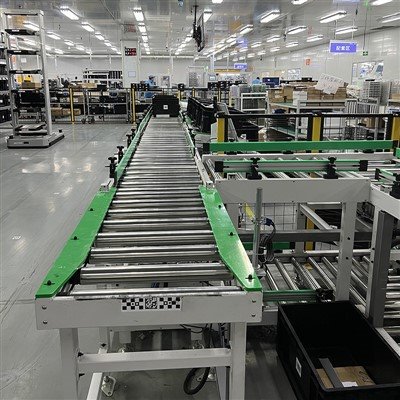


Hey there! As a supplier of industrial forklift robots, I've seen firsthand how these nifty machines are revolutionizing warehouses. One of the big questions that often pops up is: how do industrial forklift robots handle sudden changes in the warehouse layout? Well, let's dig in and find out!
First off, it's important to understand that modern industrial forklift robots are equipped with some seriously cool tech. We're talking about sensors, cameras, and advanced software that work together to help these robots navigate and do their jobs.
Sensor Technology
The sensors on these forklift robots are like their eyes and ears. They can detect all sorts of things in the warehouse environment. For example, laser scanners are commonly used. These scanners send out laser beams and measure how long it takes for the beams to bounce back. This helps the robot create a 3D map of its surroundings in real - time.
If there's a sudden change in the warehouse layout, like a new rack being installed or a pallet being moved to a different spot, the laser scanners will pick up on these changes right away. They'll update the robot's internal map, and the robot can then adjust its route accordingly.
Another type of sensor is the proximity sensor. These sensors can detect when the robot is getting too close to an object. So, if there's a sudden obstacle in the robot's path due to a layout change, the proximity sensor will send a signal to the robot to stop or change its direction.
Camera Systems
Cameras are also a crucial part of the equation. They can provide a visual feed of the warehouse, which is super useful for the robot to identify objects and changes in the layout. Some cameras are used for object recognition. For example, they can tell the difference between a pallet, a rack, and a human worker.
If there's a new pallet placed in an unexpected location because of a layout change, the camera can recognize it as a pallet. The robot's software can then analyze the situation and decide the best way to interact with it. Maybe it needs to move the pallet to a different location or just avoid it while going about its other tasks.
There are also cameras that are used for navigation. They can read markers on the floor or walls of the warehouse. These markers act like a roadmap for the robot. If the layout changes and some of the markers are moved or new ones are added, the camera can detect these changes and update the robot's navigation instructions.
Adaptive Software
The software that runs these forklift robots is the real brain behind the operation. It's designed to be adaptive, meaning it can learn and adjust to new situations. When a sudden change in the warehouse layout is detected by the sensors or cameras, the software kicks into action.
It will analyze the new data and come up with a new plan for the robot. This might involve recalculating the shortest and safest route to its destination. The software can also take into account any potential hazards or traffic patterns in the new layout.
For example, let's say there's a new one - way aisle in the warehouse. The software will update the robot's movement rules to ensure it follows the new traffic flow. It can also prioritize certain tasks based on the new layout. If a particular area of the warehouse has become more accessible due to the change, the robot might focus more on tasks in that area.
Case Studies
Let's take a look at a few real - life examples to see how these forklift robots handle layout changes.
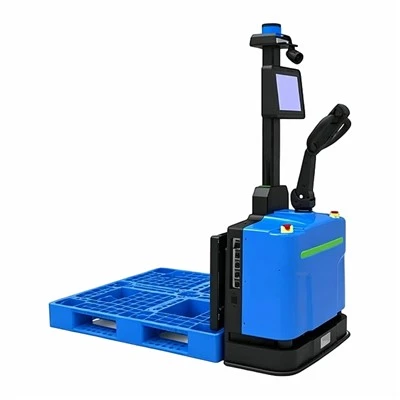
In one warehouse, they decided to reconfigure their storage racks to make better use of the space. This meant moving some of the racks to different locations and changing the width of the aisles. Our Automated Forklift Robert was on the job. The laser scanners on the robot quickly detected the new positions of the racks and updated the internal map. The software then recalculated the robot's routes to avoid the newly narrow aisles and to access the racks efficiently. In just a few hours, the robot was back to working at full capacity, adapting to the new layout like a pro.
In another case, a warehouse had a sudden influx of new inventory. The workers quickly stacked the pallets in random locations in the available space, causing a major change in the layout. Our Automatic Dual - Mode Pallet Forklift was able to handle this situation with ease. The cameras on the forklift recognized the new pallets and their locations. The adaptive software then adjusted the robot's tasks, prioritizing the movement of these new pallets to their proper storage locations.
Challenges and Solutions
Of course, handling sudden layout changes isn't always a breeze. One of the challenges is the time it takes for the robot to fully adapt to the new layout. Sometimes, the initial data collection and route recalculation can take a bit of time. To solve this, we're constantly improving our sensor technology to be faster and more accurate. We're also working on optimizing the software algorithms to speed up the decision - making process.
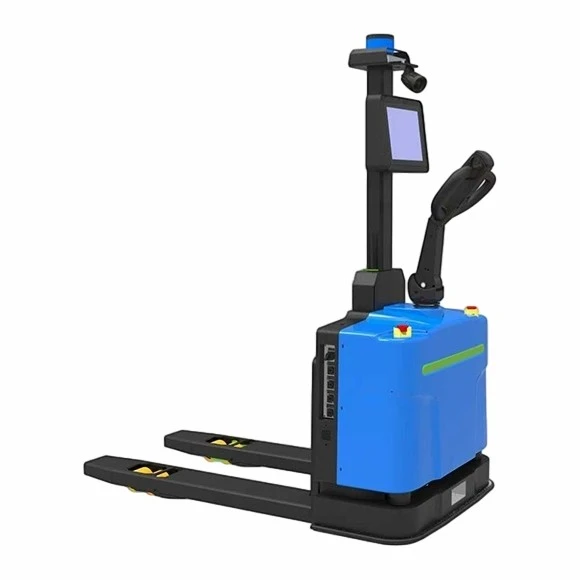

Another challenge is ensuring the safety of the robot and other workers in the warehouse during the layout change. When there are new obstacles or changes in the traffic flow, there's a risk of collisions. That's why our forklift robots are equipped with emergency stop buttons and safety features. The sensors are also designed to detect human workers from a safe distance, and the robot will automatically slow down or stop when it senses someone nearby.
Our Product Range for Different Warehouse Needs
If you're in the market for an industrial forklift robot, we've got a great range of options to suit different warehouse environments and layout change scenarios.
The Warehouse Driverless Forklift is perfect for warehouses with medium - to - large - scale operations. It's highly flexible and can easily adapt to minor to moderate layout changes. With its advanced sensor and camera systems, it can quickly detect and adjust to new obstacles and storage configurations.
The Warehouse Automated Stacker is ideal for warehouses that require heavy - duty stacking operations. It can handle large pallets and stack them at different heights. Its adaptive software allows it to adjust to layout changes related to rack height and position, ensuring efficient stacking even when the warehouse layout is modified.
The Warehouse Automatic Stacker Forklift combines the functionalities of a stacker and a forklift. It's a versatile option for warehouses with complex layouts. Whether there are changes in the aisle width or the location of storage areas, this robot can handle it all.
So, if you're looking to improve the efficiency of your warehouse operations and need a solution that can handle sudden layout changes, our industrial forklift robots are the way to go. We're always here to help you choose the right product for your specific needs. If you're interested in learning more or starting a procurement discussion, just reach out, and we'll be happy to chat!
References
- "Industrial Robotics in Warehouse Automation" - Journal of Warehouse Management
- "Sensor Technology for Forklift Robots" - Robotics Research Magazine
- "Adaptive Software in Industrial Automation" - Automation Technology Journal